Honors Courses: Wroxton
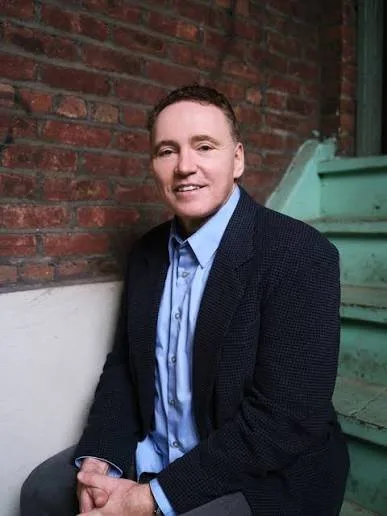
Professor of Mathematics & Environmental Science, NYU
David Holland is a professor of mathematics and environmental science at New York University and an internationally recognized climate scientist whose work focuses on the changing polar regions and their implications for global sea level. His research combines mathematical modeling, environmental observation, and sustained field investigation in Greenland and Antarctica. Over several decades, he has worked to understand how warming oceans and atmosphere interact with the great ice sheets, how those interactions may accelerate glacier loss, and how scientific knowledge can improve forecasts of future change. His approach links theory to direct experience: models are informed by measurements gathered in demanding polar environments, while field observations are interpreted through the physical and mathematical principles that govern climate systems.
Holland’s scholarship is especially relevant to the public decisions that societies must make under uncertainty. Forecasts of ice-sheet change and sea-level rise are not merely academic exercises; they shape planning for cities, infrastructure, ecosystems, and communities exposed to coastal risk. He therefore treats communication as an essential part of scientific work. His goal is to present difficult evidence clearly, distinguish what is known from what remains uncertain, and give students and decision-makers the tools to evaluate competing claims. In teaching, he emphasizes questioning over passive acceptance. Students are expected to investigate mechanisms, examine assumptions, and connect scientific findings to policy choices involving mitigation, adaptation, and climate stabilization.
For this course, Holland serves as lead professor and principal architect of the mathematical-sciences and policy components. He guides students through the greenhouse effect, temperature change, ocean circulation, acidification, extreme storms, ice-sheet loss, sea-level rise, and fire. He also leads examination of carbon removal, alternative energy, solar-radiation management, biological interventions, glacier-protection concepts, and other possible responses. His teaching brings together scientific rigor, field experience, policy relevance, and a willingness to confront unresolved ethical and governance questions. As a Fellow of the Explorers Club, he also participates in collaborative work examining pathways to stabilization of climate change, focused on efforts to investigate holding back a rising global sea level in a warming world